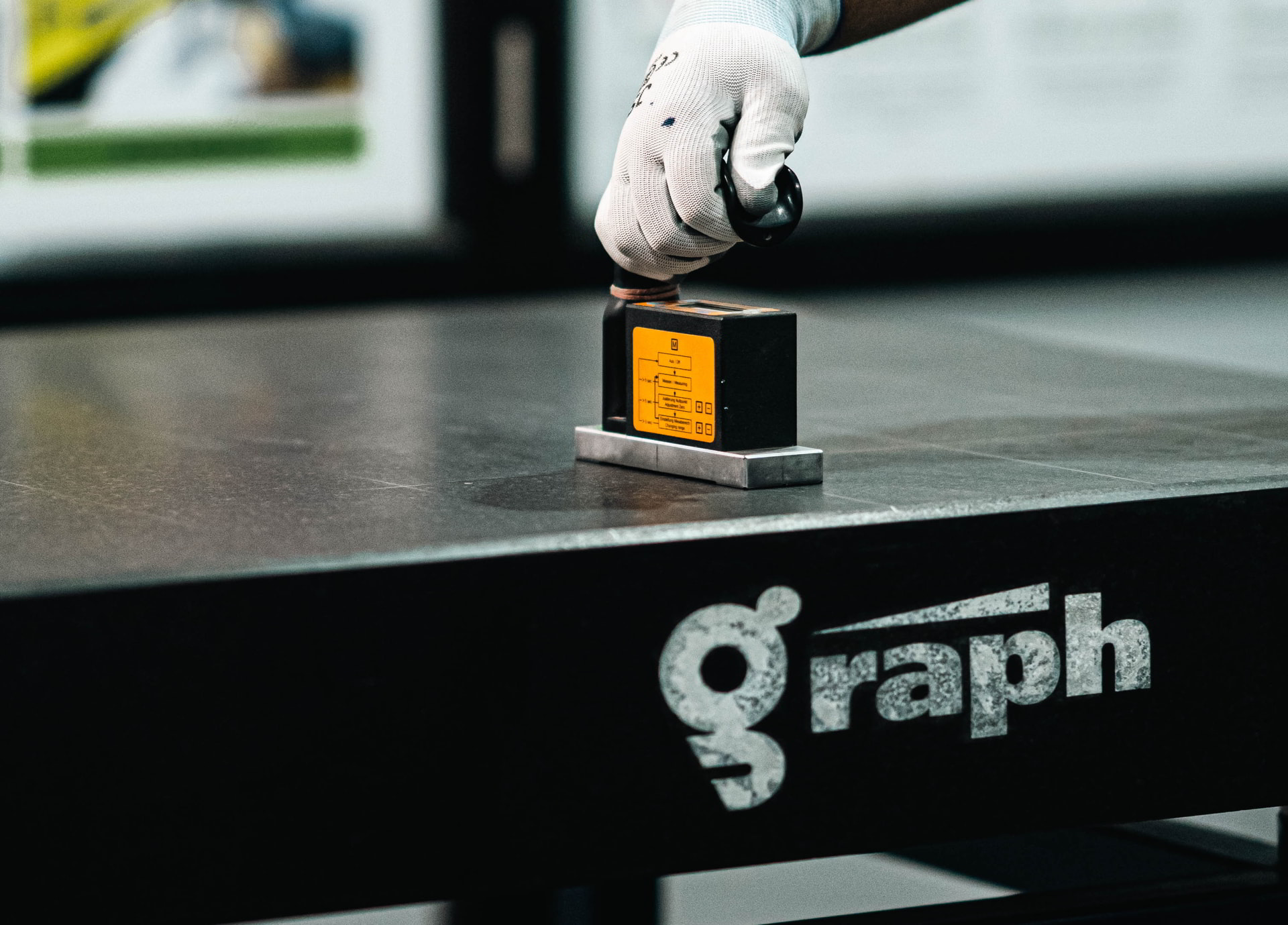

Granite surface plates are vital tools in any precision-focused manufacturing or inspection environment. But not all granite plates are created equal. If you’re investing in a surface plate for quality assurance, metrology, or machining operations, understanding the core properties — flatness, hardness, and accuracy — is essential.
Why These Properties Matter
When you’re working with tolerances in microns, even the slightest deviation can compromise product quality, tooling accuracy, and calibration reliability. That’s why choosing a granite plate based on critical physical properties isn’t optional — it’s fundamental.
1 Flatness: The Foundation of Precision
Flatness is the most critical property of any surface plate. It defines how level and true the surface is across the entire plate.
What to Know:
- Flatness is measured in microns or micrometers.
- Higher-grade plates (Grade 00 or AA) offer better flatness tolerances for laboratory and calibration use.
- Flatness is maintained through a process called hand lapping, ensuring microscopic-level accuracy.
Poor Flatness Means:
- Measurement inaccuracy
- Improper alignment of tools
- Calibration failure
Tip: Regular re-lapping is necessary to maintain long-term flatness.
2 Hardness: Built to Withstand Use
Granite plates must resist wear, scratches, and damage from tools or fixtures. That’s where hardness comes in.
Key Advantages:
- Granite is a non-metallic crystalline rock, with high compressive strength and excellent hardness.
- Ideal for environments with repeated contact from tools, gauges, or parts.
- It prevents “dishing” or pitting — common issues with softer materials like cast iron.
Measured In:
- Mohs Hardness Scale (typically 6–7 for granite)
Did you know? Granite’s mineral composition — especially quartz — contributes to its superior wear resistance.
3 Accuracy: Trusted by Industry Experts
Accuracy refers to how consistently the surface plate supports reliable, repeatable measurements. It’s a combination of flatness, material stability, and surface finish.
Look for:
- Grade Certification: Choose the grade that matches your tolerance needs (e.g., Grade B for workshops, Grade A or 00 for labs).
- Thermal Stability: Low expansion means measurements aren’t skewed by heat.
- Surface Finish: A properly lapped granite surface minimizes deflection in instruments and gauges.