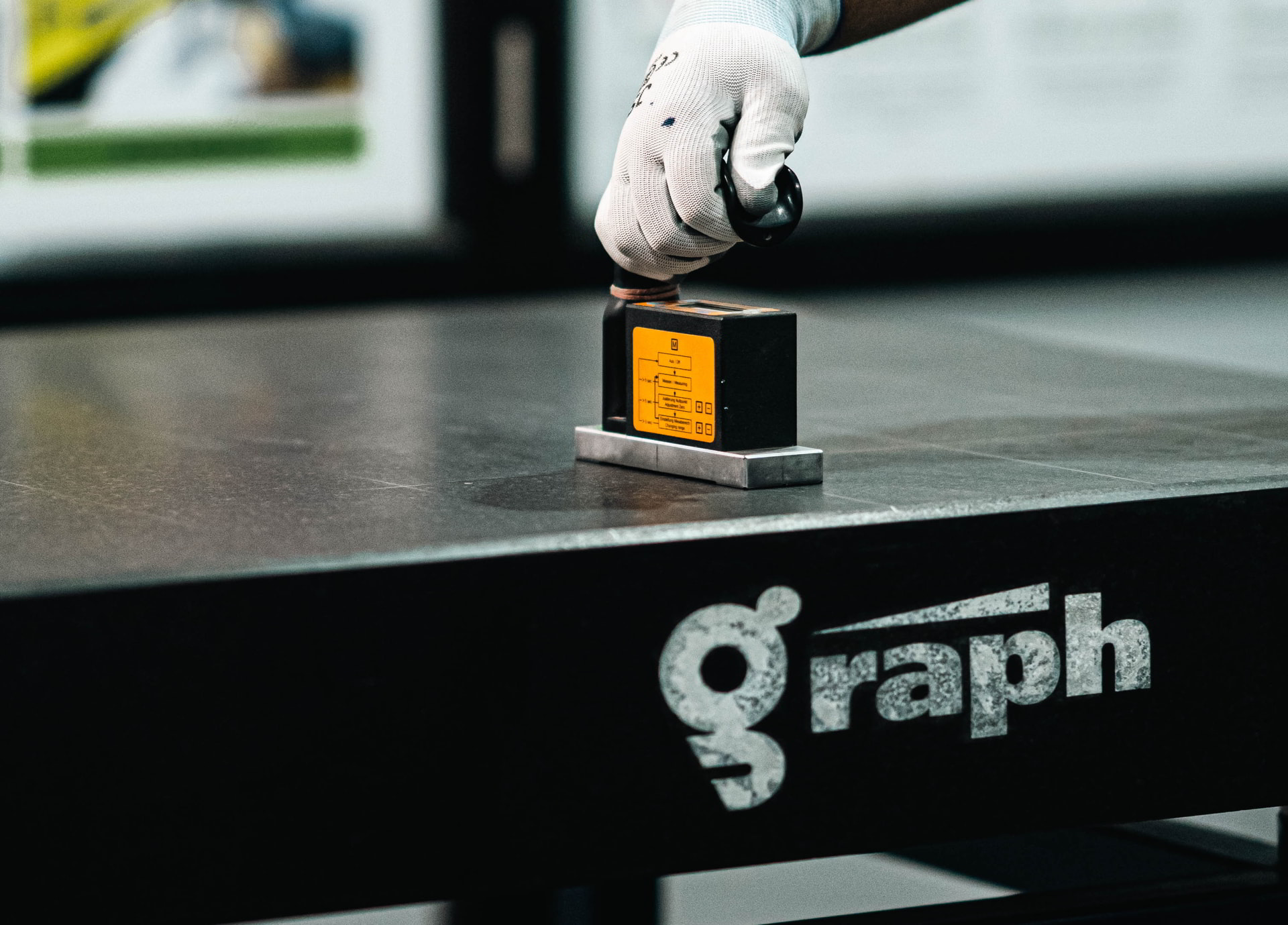

A surface plate is a flat, stable reference base used in manufacturing, machining, and inspection to measure part accuracy, calibrate instruments, or layout workpieces. Surface plates are essential in environments where micron-level precision is required.
1. Exceptional Stability
Granite is naturally stable and less affected by environmental factors like temperature and humidity. It doesn’t warp, twist, or bend over time — maintaining long-term accuracy.
2. Superior Hardness & Wear Resistance
Unlike cast iron or steel, granite is highly resistant to scratches, dents, and corrosion. This makes it ideal for use in abrasive or high-usage environments.
3. Non-Magnetic & Rust-Free
Granite is non-magnetic and does not rust. This is especially important in inspection rooms or labs with sensitive equipment and metallic tools.
4. High Flatness Accuracy
Granite plates are hand-lapped to achieve extreme levels of flatness — essential for accurate measurements.
5. Low Thermal Expansion
Granite has a low coefficient of thermal expansion, which means it maintains its shape and dimensions even in fluctuating temperatures. water delivery—saving time, property, and potentially lives during fire emergencies.
Applications of Granite Surface Plates
Granite surface plates are widely used in:
- Toolrooms & Inspection Labs
- CNC and precision machining
- Coordinate Measuring Machines (CMMs)
- Quality control departments
- Gauge calibration